
The Local Rag
The Hypocratic Oath:
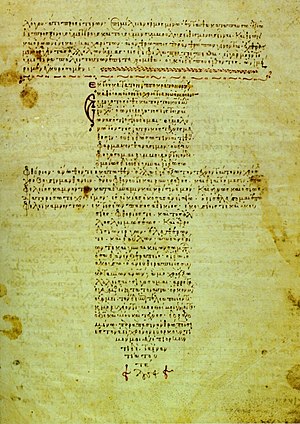
- To regard my teacher of this art as equal to my parents and to share my livelihood (with him), and to make a contribution to him when he is in need of a debt, and to judge his offspring as equal to my brothers in manhood, and to teach this art - if they want to learn it - without wage and written covenant (to them), to make an imparting of the set of rules and lecture and all the rest of instruction to my sons and those of my teacher, and to those pupils who have been indentured and who have taken an oath according to the medical law, but to no one else.
- I will use diets for the assistance of the sick according to my ability and discernment; but also to keep away injury of health and injustice.
- I will neither give any deadly drug, having been asked for it, nor will I guide the same advice. Similarly, I will not give an abortifacient pessary to a woman. In purity and in holiness I will maintain my life and my art.
- I will not use the knife, not even on those suffering from the stone, but I will give way to those who are practitioners of this work.
- And as many houses as I may go into, I will go in for the assistance of the sick, being free from all voluntary injustice and mischief and the rest, even abstaining from sexual pleasures of both female and male persons, both free and slaves.
- That which I may see or hear during treatment, or even outside of treatment concerning the life of men, which must not in any way be divulged outside, I will not speak, regarding such things to be unutterable.
And so may it be to me making complete my oath and not making it of no effect that I enjoy the benefits of my life and art and be honored by all men for time eternal; but may it be the opposite of this to me transgressing and swearing falsely.
https://en.wikipedia.org/wiki/Hippocratic_Oath#/media/File:Papyrus_text;_fragment_of_Hippocratic_oath._Wellcome_L0034090.jpg
https://en.wikipedia.org/wiki/Hippocratic_Oath#/media/File:Papyrus_text;_fragment_of_Hippocratic_oath._Wellcome_L0034090.jpg


1 Omnumi. 'I swear by.' LSJ: 'with acc. of the person or thing sworn by, to swear by.' Apollona ietron. 'Apollo Physician.' The god Apollo was associated with all forms of civilization and culture, including music, agriculture and medicine. The spelling ietron as opposed to iatron is Ionic. LSJ: 'one who heals, physician or surgeon.' This epithet is used with Apollo by many, including Aristophanes (Birds, 584) and Lycophron (1207). Asklepion. 'Asclepius.' This spelling is also Ionic. Though Homer considered Asclepius a mortal physician, he is generally considered the son of Apollo and the nymph Coronis. He is the god of the healing arts.
2 Ugeian. 'Health.' Sometimes transliterated as 'Hygieia.' She is the daughter of Asclepius. The word itself means 'health' or 'medicine.' Before the introduction of Asclepius to Athens, this word was a title of Athena (OCD). Hygieia was worshipped along side both Asclepius and Apollo. Panakeian. 'Panacea.' Literally, this word means 'All-cure.' Like Health, she is a personified daughter of Asclepius. A 15th century Latin translation (of Petrus Paulus Vergerius) reads: "Testor Apollinem et Aesculapium, Hygiemque et Panaciam Aesculapii filias; et Deas et Deos omnes me..." An older 14th century Latin translation (of Nicholas de Reggio) however reads: "Iuro per Apollinem medicum et sanativum et remediativum et deos universos et universas..."
3 historas. From histor, 'witnesses.' Cf. Hdt. 1.1, histories apodexis. The word historie can be a 'history' in the modern sense of the word, but it is more properly a 'written account of one's inquiries' (LSJ). It implies knowledge gained from scientific investigation. Galenus (I.144) used the word in reference to his recorded medical cases. The word historie is derived from the word histor, and the author of the Oath undoubtedly chose the word to distinguish the practice of medicine from what had previously passed as medicine in the same way that Herodotus distinguished himself from the logographers. The word logopoioi means a 'teller of tales,' but Herodotus and the later historians sought to make themselves not merely poetic but careful and reliable observers of events. epitelea. 'complete.' LSJ: 'brought to an end, completed, accomplished.'
4 krisin. 'discernment.' LSJ: 'separating, distinguishing ... decision, judgment.' horkon. 'oath.'
5 sungraphen. 'written covenant.' LSJ: 'writing or noting down...written contract, covenant, bond.' didaxanta. 'teacher.' Aorist participle from didasko.
6 geneteisin. 'parents.' LSJ: 'begetter, ancestor... in pl., parents.'
7 koinosesthai. 'to share.' Fut. Inf. from koinoo. LSJ: 'communicate, impart...make common, share.' chreon. 'of debt.' chreizonti. 'to him when he is in need of.' From chreizo; LSJ: 'want, lack, have need of, c. gen.'
8 metadosin. 'contribution.' Also in line 13. LSJ: 'giving a share, imparting... exchange... distribution... communication.'
9 epikrinein. 'to judge.' LSJ: 'decide, determine... select, pick out... distinguish, esteem... consider.' arresi. 'in manhood.' This is Dat. Pl. of aner, functioning as a Dative of Standard of Judgment (Smyth, 1512).
10 aneu. 'without,' with genitive (like Lat. sine).
11 misthou. 'wage.' LSJ: 'hire... pay... allowance... fee.' parangelies. 'set of rules.' LSJ: 'command or order... summons ... set of rule or precepts... instruction, precept, advice.' This word refers to written forms of instruction as opposed to the lecture.
12 akroesios. 'lecture.' LSJ: 'hearing, hearkening or listening to... thing listened to, recitation, lecture.'
14 sungegrammenois. 'who have been endentured.' Perfect middle participle from sungrapho. LSJ: 'to draw up a contract or bond, [Per. Mid. Part.:] the signatory to a contract.'
15 horkismenois. 'who have taken an oath.' Perfect passive participle from horkizo meaning (LSJ): 'make one swear, administer an oath ... Pass. to be sworn.' ietrikoi. 'medical.' LSJ: 'of or for a doctor... surgery, medicine.' See note at line 31.
16 diaitemasi. 'diets.' LSJ: 'mostly in pl., food, diet.' opheleiei. 'assistance.' LSJ: 'help, aid, succor... assistance... benefit.' kamnonton. 'of the sick.' Present participle of kamno, meaning (LSJ): 'to be sick or suffering.'
17 delesei. 'injury of health.' LSJ: 'mischief... injury of health.'
18 eirxein. 'to keep away.' Future infinitive of ergo. LSJ: 'to shut out... hinder, prevent...keep oneself from, abstain.' pharmakon. 'drug.'
19 aitetheis. 'having been asked for it.' Aorist passive participle of aiteo. thanasimon. 'deadly.' LSJ: 'deadly, fatal.' huphegesomai. 'will I guide.' LSJ: 'go just before, guide, lead.' sumboulien.'advice.' LSJ: 'advice, counsel.' These lines are clearly in reference to euthanasia. Socrates and Plato appear to have approved of euthanasia in certain instances, such as suffering from an incurable disease with great pain, and saw no moral problems with it. Thus, this prohibition of euthanasia would have run countercurrent to the thinking of the majority of Greeks; based upon this, it might be assumed that this is a later interpolation. At the same time, the fact that the physician swore not to commit euthanasia does not necessarily mean that he morally condemned it; rather, it might have been that euthanasia was viewed as contrary to the ultimate ideals of the physician. Still, it is possible that these lines are a later interpolation from Christian times (See Synthesis).
20 pesson. 'pessary.' This was originally an oval-shaped stone, but also carried the following meaning (LSJ): 'medicated plug of wool or lent to be introduced into the vagina, anus, etc., pessary.'
21 phthorion. 'abortifacient.' LSJ: 'destructive: esp. of means to produce abortion.' This prohibition of abortion is similar to the previous prohibition of euthanasia. Abortion was extremely common in ancient Greece, as was the practice of exposure. Additionally, the Corpus Hippocratum contains detailed instructions on how to perform abortions. Attitudes regarding abortion do not seem to have changed until shortly before Christian times, so this line too has been argued to be a later interpolation (see Synthesis). hagnos. 'in purity.' Adv. hosios. 'in holiness.' Adv. diatereso.'I wil maintain.' LSJ: 'watch closely, observe... maintain.'
22 temeo. 'I will [not] use the knife.' Ionic future of temno. LSJ: 'of a surgeon, to cut... use the knife.'
23 lithiontas. 'those suffering from the stone.' This is a probable reference to gall stones or kidney stones, which produce great pain that can only be relieved by surgery. Some believe that this is a reference to castration, but the following clause makes that seem implausible, as well as a dearth of support from other classical authors. ekchoreso. 'I will give way.' LSJ: 'depart... withdraw... give way... retire.' ergatesin. 'practitioners.' LSJ: 'workman... one who practises... practitioner.'
24 prexios. 'work.' This is an Ionic form of praxis. As discussed in the Introduction herein, these lines regarding surgery are particularly difficult to interpret in light of the entire CorpusHippocratum and what is known of Greek medical practice. At issue is whether a distinction was made between physicians who could not practice surgery and surgeons. In the writings of the Corpus Hippocratum, no distinction is made. In fact, physicians of the Hippocratic guild regularly performed surgical procedures. These facts would tend to support the hypothesis that this prohibition was inserted in later times or that the Oath was taken at an early stage in the education of the physician. Phillips (Greek Medicine, 156) remarks, "It appears that in Alexandria they [surgeons] became gradually separated from other practitioners ... until in later antiquity, and for long afterwards, professional surgery came to be regarded as an undignified craft, though physicians of standing might sometimes perform operations, as Galen did." But if these lines were later interpolated due to a Christian denouncement of surgery or a loss of respectable standing for surgeons, then the line regarding the 'practitioners of this work' seems contradictory. Thus, the most plausible solution seems to be that the Oath was meant to be taken early in the education of the physician. hokosas. 'as many.' This is an Ionic form of hoposas.
25 esio. 'I may go into.' Present subjunctive of eiseimi. eseleusomai. 'I will go in.' Future of eiserchomai. ektos. 'free from.' LSJ: 'outside of, free from,' with genitive.
26 hekousies. 'voluntary.' LSJ: 'voluntary... undertaken voluntarily.' phthories. 'mischief.'
27 aphrodision. 'sexual pleasures.' LSJ: 'belonging to the goddess of love... sexual pleasures.' ergon. 'abstaining from.' See note for line 18. More detail regarding the types of things to be abstained from are provided in The Physician (q.v.), a short treatise in the Corpus Hippocratum on the character and morals a physician ought to have. Included in this work are precepts regarding personal appearance and hygiene, confidentiality, disposition, self-control, and a similar statement regarding abstinence from sexual relations with patients as herein. Of particular relation to the line herein is the passage: "[The sick] put themselves into the hands of the doctors, and at all hours these meet with women, maidens, and possessions, very precious indeed. So toward all these self-control must be used" (I: 2, 313).
28 somaton. 'persons.' LSJ: 'body.'
29 therapeiei. 'treatment.' LSJ: 'service, attendance... medical or surgical treatment or cure.'
31 eklaleisthai. 'be divulged.' LSJ: 'blurt out, blab, divulge.' arreta. 'unutterable.' LSJ: 'not to be spoken... not to be divulged... unutterable.' These lines regarding confidentiality certainly pertain to the modern notion of doctor/patient confidentiality, but they also pertain to what might be called trade secrets. Medical knowledge was to be imparted only to those who were initiated by the Oath. Lines 5-15, detailing the relationship between the physician and his teacher, as well as with his fellow-physicians, show clearly that the medical guild was a closed society or even a 'secret society,' and the knowledge of the medical arts was to be kept strictly within this professional circle.
33 suncheonti. 'making it of no effect.' LSJ: 'obliterate, demolish... confound, make of no effect.' eie. 'may it be.' Optative. epaurasthai. 'enjoy the benefits.' Aor. Mid. Inf. LSJ: 'partake of, share... reap the fruits, enjoy the benefits of.'
34 doxazomenoi. 'be honored.' LSJ: 'to be distinguished, held in honor.'
35 parabainonti. 'transgressing.'
36 epiorkeonti. 'swearing falsely.' LSJ: 'swear falsely, forswear oneself.' tanantia. Crassis for ta anantia. 'the opposite.'
If we assume that all lines of the Oath are original, or, at least, of a pre-Christian origin, then how do we reconcile the most problematic lines regarding euthanasia and abortion?
The position of the Oath regarding abortion is of particular interest to many. The famous Roe vs. Wade decision, which effectively legalized abortion in the United States, tried to deal with this apparent prohibition of abortion. In the decision of the majority of the Court, the Justices referenced the interpretation of the Oath by Ludwig Edelstein, stating:
"This, it seems to us, is a satisfactory and acceptable explanation of the Hippocratic Oath's apparent rigidity. It enables us to understand, in historical context, a long-accepted and revered statement of medical ethics."
Edelstein's interpretation of the Oath was essentially to discount its importance in pre-Christian Greece. He held that it was the ethic of a small minority of physicians (probably of Pythagorean origin) and that the Oath did not gain popularity until Christian times. There are several problems with Edelstein's hypothesis, but, nevertheless, an explanation of the prohibition of abortion is difficult. There are several points which must be satisfied.
First, as has already been stated, other parts of the Corpus Hippocratum discuss abortion techniques. But what does this prove? As many have pointed out, virtually every principle expounded in the Oath is elsewhere contradicted in the Corpus Hippocratum. Might there be a reason that the techniques of abortion are delineated, yet abortion is prohibited? Pliny the Elder's Natural Historyfrom the 1st century BC lists several compounds and methods known to cause abortion (Nardi, 1971). But Pliny was clearly opposed to abortion. He characterizes abortions as scelera or crimes (XXVIII, 7) and says that it makes humans worse than beasts (X, 63). When he discusses raven's eggs in XXX, 14, he clearly demonstrates that his purpose in discussing their abortifacient ability is to warn pregnant women to avoid them. So it is conceivable that the descriptions of abortion methods in the Corpus Hippocratum were provided for the sake of knowledge, more than for the sake of describing a potential procedure. Thus, the presence of information on abortions in the Corpus Hippocratum does not in and of itself contradict the Oath.
Next, we must consider the possibility of the very literal interpretation of the text. The Oath says, "I will not give an abortifacient pessary to a woman." Why is it necessary to adds the words "to a woman?" Many have suggested (cf. Bellemare) that these words are present because there is no prohibition from giving the pessary to a man, just to a woman. This would mean that the Hippocratic school in fact had no problem with performing abortions, only in circumventing the male's rights. To understand this better, we must explore the legal position of abortion in ancient Greece. Abortion per se was not illegal in ancient Greece, but we do have records of cases where abortion was prosecuted. We learn from these records (Lysias X; Cicero XI, 32) that the issues in these prosecutions was the violation of the father's rights to his offspring. Edelstein summarily dismisses this evidence because he correctly perceives that the issue was not the abortion, and therefore not the moral questions regarding the embryo, but only paternal rights. However, if we combine the literal reading of the text with the legal issue presented, we quickly see that the Hippocratic prohibition might have been nothing more than a pledge not to circumvent male authority. This pledge, if understood in this way, would have helped physicians gain respect at a time when many women went secretly to midwives or others to procure abortion.
Again, however, this presents us with yet another plausible explanation. Just as the Oath forbade the swearer from performing surgery, and instead to defer to one more qualified, so too the prohibition of abortion could have been not a moral condemnation of abortion but rather a yielding to a specialist. Indeed, there are no known extant references in the ancient literature of either a Roman or a Greek physician facilitating an abortion. This fact would appear to question the previous theory, though it does not exclude it. What the ancient references to abortion do show is that midwives were the normal channel for abortion procedures. The famous interchange from Plato's Theaetetus (149c-d) demonstrates this:
[Socrates] It is more likely, is it not, that no one can tell so well as a midwife whether women are pregnant or not?
[Theaetetus] Assuredly.
[Socrates] Moreover, with the drugs and incantations they administer, midwives can either bring on the pains of travail or allay them at their will, make a difficult labor easy, and at an early stage cause a miscarriage if they so decide.
This passage also demonstrates the fact that ancient physicians only rarely had any part in delivering babies or consulting concerning pregnancies. Thus, if the Hippocratic school held that midwifery was the normal "profession" which performed abortions, then we might understand the prohibition of abortions in the same way that we understand the prohibition of surgeries.
There remains the theory, chiefly of Edelstein, that the Oath was of Pythagorean origin, and that this origin presents the reason for the prohibition and, in Edelstein's view, the moral condemnation of abortion. There is, however, little evidence to support this claim (cf. Bellemare).
Thus, what can be concluded? What we know for sure is that abortion was practiced commonly throughout ancient Greece, as was the practice of exposure. In Politics, Aristotle recommends abortion as a means of population control, though he conditions this statement by stating that abortion should not be performed after the fetus has gained "sensitivity." We further know that this attitude progressively changed with time, to the point where Pliny the Elder condemned abortion, and the practice in general became far less common in the Christian era. But those latter two pieces of information are only relevant if we hold to the view that the prohibition of abortion was a later addition. We know that the Corpus Hippocratum describes abortion procedures, but to what end is unclear. We know that midwives were the usual practioners of abortion, but it is not known if this was to the universal exclusion of physicians. Lastly, we know that potential legal problems arose when a woman procured an abortion without the permission of a man, but we also know that such an issue arose only rarely. These facts do not provide a clear-cut answer as to whether the prohibition of abortion in the Oath was a moral or practical one, but none of these facts seem to strongly contradict the notion that Hippocratic physicians, for one reason or another, did not practice abortion.
This leads us to a discussion of euthanasia. This prohibition seems at first to be very straightforward and perfectly in line with the maxim, "Do no harm." Again, though, there are a number of competing theories. Edelstein's contention that the ban on suicide and/or assisted-suicide is Pythagorean in origin is based largely on one of the most famous Platonic dialogues, Phaedo. Cebes and Simmias, both Pythagoreans, are present with Socrates in the last days of his life. Socrates refers to the Pythagorean philosopher Philolaus and his vigorous arguments against suicide. It is unclear, however, whether Philolaus spoke for himself or the Pythagorean school, and the two Pythagorean conversants (61b) seem unequivocal on the subject of suicide. Thus, again, the fact that Philolaus was a Pythagorean seems to be irrelevant to the discussion. What is needed is evidence regarding the actual practice of euthanasia by early physicians. Information of this type is scarce, but one source popularly cited is Apuleius's Metamorphoses or The Golden Ass.
The Golden Ass of Apuleius, written around 180 A.D., is the only complete Latin novel still extant. Neither the novel's central story nor any of its collateral tales can be proven to be entirely the product of Apuleius' innovation; indeed, much the opposite is supported by the bulk of evidence. Still, the specific configuration and presentation of the story and its interwoven tales are eruditious, and from its composition can be gleaned the scatterings of Apuleius' philosophical perspectives and purposes in writing the story.
That Apuleius is not the originator of the ass-tale is admitted by the author himself. In the preface to the novel, Apuleius characterizes what he is about to write as sermone isto Milesio varias fabulas and as a fabulam Graecanicam. By themselves, these characterizations would lead the reader to believe that Apuleius has drawn heavily from either a Greek written or oral source. These 'Milesian Tales' are assumed to be those Greek stories ascribed to Aristides of Miletus, and the translations made by Sisenna into Latin in the first century BC. (Hanson 2). Both of these expectations are superficially fulfilled by extant ancient texts; the former by the Lucianic or Psudeo-Lucianic Lucius or the Ass, or henceforth the Onos, and the latter by three fragments surviving from Sisenna's translation of Aristides (Anderson 201). Analysis of the Onos shows a definite relation between it and The Golden Ass, and the three fragments from Sisenna, though brief and seemingly unrelated, can be shown to fit the tale as Apuleius has preserved it. (Mason (228) rejects the idea that these three fragments have a connection with the ass-tales, but Anderson (201) provides a convincing argument.) Still, questions remain concerning the authorship and originality of both of these supposed source documents, and the original content of Aristides' tales is almost unknowable.
All of this is important because it shows how some have argued that a late Roman novel can be used as factual and historical evidence of earlier Greek society, and that is, basically, because it is argued that the stories all have an early Greek origin. Thus, in X, 2-12, we see the story of a physician coming to testify in the trial of a man accused of murder. The physician says that he was approached by a man asking for a deadly poison to end the suffering of a terminally-ill man. The physician did not believe the man and gave him a powerful sleeping concoction. This concoction was given to a young boy, and therefore the physician says that the boy would be found alive in his tomb, and he was. The rest of the story is unimportant. What is to be observed is that many argue that this is evidence of a physician being expected to provide a poison for purposes of euthanasia, and it is assumed that this physician would have provided a poison had he believed the man's story. However, it should be noted that the physician makes no clear statement that he would have provided a poison if he had believed him. It is tenable to believe that the physician gave the sleeping powder only as a means of incrimination and to prevent the man from obtaining a real poison elsewhere.
Indeed, later in book X is an episode of a woman who wanted to kill her husband by doing the same thing. She went to another physician, and, for less money, obtained the poison to kill her husband. This second physician, however, is cheated by the woman out of his money, just as the first physician thwarted the plans of killing the boy. The chief difference is that the first physician is presented as an honest, upright, respectable man, whereas the second physician is painted as a scoundrel and a quack. So the only thing that the story seems to really prove is that there were two types of physicians: one who would do anything for money, and another of principle and virtue. We know historically that this former type of physician did exist and this was the reason that Hippocrates introduced a framework to create the latter type of physician.
How suicide and/or euthanasia was regarded by ancient law is difficult to determine because for practical reasons few if any punishments for suicide could be proscribed. However, Aristotle tells us that suicide was punished in Athens with dishonorable burial arrangements and suicide was illegal in Thebes. But neither of these facts tells us much about euthanasia.
Thus, what can we say about the Hippocratic position regarding euthanasia? Unlike the abortion issue, there seems to be little doubt of or evidence to contradict the assertion that the Oathforbade euthanasia, regardless of how suicide was viewed by society as a whole. It is also apparent that there were some physicians who would perform euthanasia, but these physicians were perhaps looked down upon.
What then of Edelstein's and other's assertion that the Oath had little if any widespread acceptance among pre-Christian physicians? Unfortunately, the earliest clear, external evidence comes from Scribonius Largus, a Roman physician c. 50 AD. In his Compositiones, while arguing that physicians should not kill anyone, even their most bitter enemies, he cites the Oath and clearly indicates that it contained the passages against abortion and euthanasia. While Scribonius Largus lived during Christian times, his writings are early enough that it can be likely concluded that they are without Christian influence and also reflective of how the Oath had been viewed in the past. His writings seem to indicate that by his time the Oath enjoyed almost universal acceptance among physicians. This seems to refute the argument that the Oath later became popular because of Christian influence.
Scribonius understands the abortion issue as a case of physicians "doing no harm" even in a small matter. This would indicate that the Hippocratic prohibition of abortion, at least in the mind of Scribonius in the 1st century AD, and in the minds of as many physicians as we can assume Scribonius to represent, was a moral prohibition, as was the prohibition of euthanasia.
The Oath addresses aspects of commitment. The first is the physician's commitment to the profession; the second is his commitment to his patients. It is interesting that the commitment to the profession is placed first. Whether the author intended for these duties to be preëminent over the rest of the Oath is unclear, but this order must surely have a psychological power over the swearer of the Oath. It is the first part of the Oath that is truly binding, regardless of what the swearer of the Oath may or may not do in the future. If the swearer chooses not to practice medicine, then his sworn obligations to his patients are irrelevant; but his oath to his teacher remains.
One of the most striking features of the Oath in the original Greek is the usage of the word techne to describe the profession. Medicine to the Hippocratic student is more than a profession or a science, it is an art. The root of this Greek word also implies creativity. An art is something that can be learned and developed but a creative art must additionally be accompanied by inspiration or ingenium. It is clear that the word techne is an important concept to the author of the Oath, for it occurs at the beginning, middle, and end of the pledge. A faithful servant of this art is to be honored by all men, eternally. The wording throughout the Oath seems deliberate and solemn. The Oath speaks of 'purity,' 'holiness,' and 'injustice,' and the invocation to all of the gods and goddesses sets the tone for the rest of the pledge.
There is a treatise in the Corpus Hippocratum entitled The Art. In it, the author defends the art of medicine as being a true art. Indeed, before the time of Hippocrates, medicine was looked upon incredulously and the practitioners of medicine did little to ameliorate their standing in society. Medicine was not a science or art, but it tended to look for supernatural reasons for illness or it used unsound science in its attempts to help people. The Hippocratic school of physicians sought to apply scientific principles of investigation toward the diagnosis and treatment of ailments. Much of what Hippocrates has contributed to Western medical tradition has served to elevate the position of the physician in society. The treatises The Physician and The Art address these aspects, and the Oath summarizes the physicians' commitment to these principles. The Art, in particular, refutes the argument that the medical art was ineffective or unimportant toward the curing of the patient's illness and seeks to elevate the status of the physician in society. While the author of The Art was certainly not Hippocrates, the work does demonstrate the advances made by the Hippocratic school of medicine toward a new respect for the work that physicians do as important and as an art equal to all other arts. In the Aphorisms of Hippocrates is the famous line repeated by Seneca: 'Life is short, the art long.'2 This art is the art of medicine. We remember this and we remember the Oath when we read passages such as this from Precepts VI:
"Sometimes give your services for nothing, calling to mind a previous benefaction or present satisfaction. And if there be an opportunity of serving one who is a stranger in financial straits, give full assistance to all such. For where there is love of man, there is also love of the art (techne). For some patients, though conscious that their condition is perilous, recover their health simply through their contentment with the goodness of the physician. And it is well to superintend the sick to make them well, to care for the healthy to keep them well, also to care for one's own self, so as to observe what is seemly" (W.H.S. Jones, trans.).
Thus, the original oath forbade abortion, euthanasia, surgery (apparently for the untrained only), and encouraged a standard for medical ethics. Throughout the centuries, though some physicians have relaxed their positions regarding abortion, euthanasia, and surgery, and though they no longer swear to the ancient Greek gods, if even to any god, still the Oath has provided a moral framework for the medical profession and at the very least encouraged the development of sound, ethical principles among each generation of physicians. By raising the standards for physicians, Hippocrates and the Hippocratic Oath have made medical practice a respectable profession and a true art.
This is the earliest Translation of the Hypocratic Oath:
ὄμνυμι Ἀπόλλωνα ἰητρὸν καὶ Ἀσκληπιὸν καὶ Ὑγείαν καὶ Πανάκειαν καὶ θεοὺς πάντας τε καὶ πάσας, ἵστορας ποιεύμενος, ἐπιτελέα ποιήσειν κατὰ δύναμιν καὶ κρίσιν ἐμὴν ὅρκον τόνδε καὶσυγγραφὴν τήνδε:
ἡγήσεσθαι μὲν τὸν διδάξαντά με τὴν τέχνην ταύτην ἴσα γενέτῃσιν ἐμοῖς, καὶ βίου κοινώσεσθαι, καὶ χρεῶν χρηΐζοντι μετάδοσιν ποιήσεσθαι, καὶ γένος τὸ ἐξ αὐτοῦ ἀδελφοῖς ἴσον ἐπικρινεῖν ἄρρεσι, καὶ διδάξειν τὴν τέχνην ταύτην, ἢν χρηΐζωσι μανθάνειν, ἄνευ μισθοῦ καὶ συγγραφῆς, παραγγελίης τε καὶ ἀκροήσιος καὶ τῆς λοίπης ἁπάσης μαθήσιος μετάδοσιν ποιήσεσθαι υἱοῖς τε ἐμοῖς καὶ τοῖς τοῦ ἐμὲ διδάξαντος, καὶ μαθητῇσι συγγεγραμμένοις τε καὶ ὡρκισμένοις νόμῳ ἰητρικῷ, ἄλλῳ δὲ οὐδενί.
διαιτήμασί τε χρήσομαι ἐπ᾽ ὠφελείῃ καμνόντων κατὰ δύναμιν καὶ κρίσιν ἐμήν, ἐπὶ δηλήσει δὲ καὶ ἀδικίῃ εἴρξειν.
οὐ δώσω δὲ οὐδὲ φάρμακον οὐδενὶ αἰτηθεὶς θανάσιμον, οὐδὲ ὑφηγήσομαι συμβουλίην τοιήνδε: ὁμοίως δὲ οὐδὲ γυναικὶ πεσσὸν φθόριον δώσω.
ἁγνῶς δὲ καὶ ὁσίως διατηρήσω βίοντὸν ἐμὸν καὶ τέχνην τὴν ἐμήν.
οὐ τεμέω δὲ οὐδὲ μὴν λιθιῶντας, ἐκχωρήσω δὲ ἐργάτῃσιν ἀνδράσι πρήξιος τῆσδε.
ἐς οἰκίας δὲ ὁκόσας ἂν ἐσίω, ἐσελεύσομαι ἐπ᾽ ὠφελείῃ καμνόντων, ἐκτὸς ἐὼν πάσης ἀδικίης ἑκουσίης καὶ φθορίης, τῆς τε ἄλλης καὶ ἀφροδισίων ἔργων ἐπί τε γυναικείων σωμάτων καὶ ἀνδρῴων, ἐλευθέρων τε καὶ δούλων.
ἃ δ᾽ ἂν ἐνθεραπείῃ ἴδω ἢ ἀκούσω, ἢ καὶ ἄνευ θεραπείης κατὰ βίον ἀνθρώπων, ἃ μὴ χρή ποτε ἐκλαλεῖσθαι ἔξω, σιγήσομαι, ἄρρητα ἡγεύμενος εἶναι τὰ τοιαῦτα.
ὅρκον μὲν οὖν μοι τόνδε ἐπιτελέα ποιέοντι, καὶ μὴ συγχέοντι, εἴη ἐπαύρασθαι καὶ βίου καὶ τέχνης δοξαζομένῳ παρὰ πᾶσιν ἀνθρώποις ἐς τὸν αἰεὶ χρόνον: παραβαίνοντι δὲ καὶ ἐπιορκέοντι, τἀναντία τούτων.
I swear by Apollo the Healer, by Asclepius, by Hygieia, by Panacea, and by all the gods and goddesses, making them my witnesses, that I will carry out, according to my ability and judgment, this oath and this indenture.
To hold my teacher in this art equal to my own parents; to make him partner in my livelihood; when he is in need of money to share mine with him; to consider his family as my own brothers, and to teach them this art, if they want to learn it, without fee or indenture; to impart precept, oral instruction, and all other instruction to my own sons, the sons of my teacher, and to indentured pupils who have taken the physician’s oath, but to nobody else.
I will use treatment to help the sick according to my ability and judgment, but never with a view to injury and wrong-doing. Neither will I administer a poison to anybody when asked to do so, nor will I suggest such a course. Similarly I will not give to a woman a pessary to cause abortion. But I will keep pure and holy both my life and my art. I will not use the knife, not even, verily, on sufferers from stone, but I will give place to such as are craftsmen therein.
Into whatsoever houses I enter, I will enter to help the sick, and I will abstain from all intentional wrong-doing and harm, especially from abusing the bodies of man or woman, bond or free. And whatsoever I shall see or hear in the course of my profession, as well as outside my profession in my intercourse with men, if it be what should not be published abroad, I will never divulge, holding such things to be holy secrets.
Now if I carry out this oath, and break it not, may I gain for ever reputation among all men for my life and for my art; but if I transgress it and forswear myself, may the opposite befall me.[
Anderson, G. Ancient Fiction: The Novel in the Graeco-Roman World. Totowa, New Jersey: Barnes & Noble Books, 1984.
Bellemare, Pierre M. "The Hippocratic Oath." Healing in Religion and Society From Hippocrates to the Puritans: Selected Studies. Lewiston, NY: The Edwin Mellen Press, 1999.
Edelstein, Ludwig. "The Hippocratic Oath: Text, Translation and Interpretation." Supplements to the Bulletin of the History of Medicine, No. 1. Baltimore: The Johns Hopkins Press. Reprinted in Ancient Medicine: Selected Papers of Ludwig Edelstein. Baltimore, The Johns Hopkins Press, 1967,
Hanson, J. A., trans. Apuleius: Metamorphoses, Vol. II. In Goold, G. P. (Ed.), The Loeb Classical Library: Apuleius: Metamorphoses In Two Volumes. Cambridge: Harvard UP, 1989.
Lichtenhaeler, Charles. Der Eid des Hippokrates. Ursprung und Bedeutung. Cologne: Deutsche Ärzte-Verlag, 1984.
Liddell, H.G., R. Scott, and H.S. Jones. A Greek English Lexicon (LSJ). Oxford: The Clarendon Press, 1951.
Mason, H. J. Fabula graecanica: Apuleius and his Greek Sources. In S. J. Harrison (Ed.), Oxford Readings in the Roman Novel (pp. 217-236). Oxford: Oxford UP, 1999.
Nardi, E. Procurato Aborto nel Mondo Greco Romano. Milan: A. Giuffré, 1971.
Smyth, H. W. Greek Grammar. Cambridge: Harvard UP, 1984.
The Oxford Classical Dictionary (OCD). Oxford: The Clarendon Press, 1970.
United States Supreme Court. United States Supreme Court Reports, October Term, 1972. Rochester: Lawyers Cooperative and Bancroft Whitney, 1974.
1 For the sake of completeness, it should be mentioned that Lichtenhaeler, et al., have made convincing arguments that much of the Corpus Hippocratum was originally authored by Hippocrates, if not the Oath itself. This, of course, is not the view of the majority of the scholarship.
2 The first line of this first and most famous of the Hippocratic aphorisms reads in full: ho bios brachus, he de techne makre, ho de kairos oxus, he de peira sphalere he de kriais chalepe (Life is short, the Art long, opportunity fleeting, experiment deceptive, judgment difficult). Seneca provided the famous Latin (vita brevis est, ars longa) in De Brevitate Vitae I, 1.